When your pool's calcium hardness drops too low, the water turns aggressive. It will leach calcium right out of your plaster, concrete, and any stone or tile in contact with it. You end up with rough patches, pitting, and discoloration that spreads. The longer you let it go, the more expensive the repair. In Montgomery's heat and humidity, this happens faster than most pool owners realize. We see pools every year where low calcium has caused real structural damage that could have been prevented with a fifty-dollar bag of calcium chloride and a pH test.
How Low Calcium Weakens Plaster
Plaster is porous. It's made of cement, sand, and water, and it needs calcium to stay stable. When your pool water has too little dissolved calcium, it becomes undersaturated. That means the water is hungry for calcium, and it will pull it from whatever surface it touches. Your plaster starts to dissolve at the molecular level. You won't see it happen all at once. Instead, the surface becomes chalky and soft. If you run your hand along the wall, it feels rough, almost like sandpaper. That's calcium being stripped away.
The problem gets worse in summer. Montgomery pools get direct sun for hours every day. Heat speeds up the chemical reactions in the water. If your calcium hardness is below 200 parts per million, you're running a real risk. The ideal range is 200 to 400 ppm. Below 200 and you're in dangerous territory.
Plaster Damage Looks Different Than Other Problems
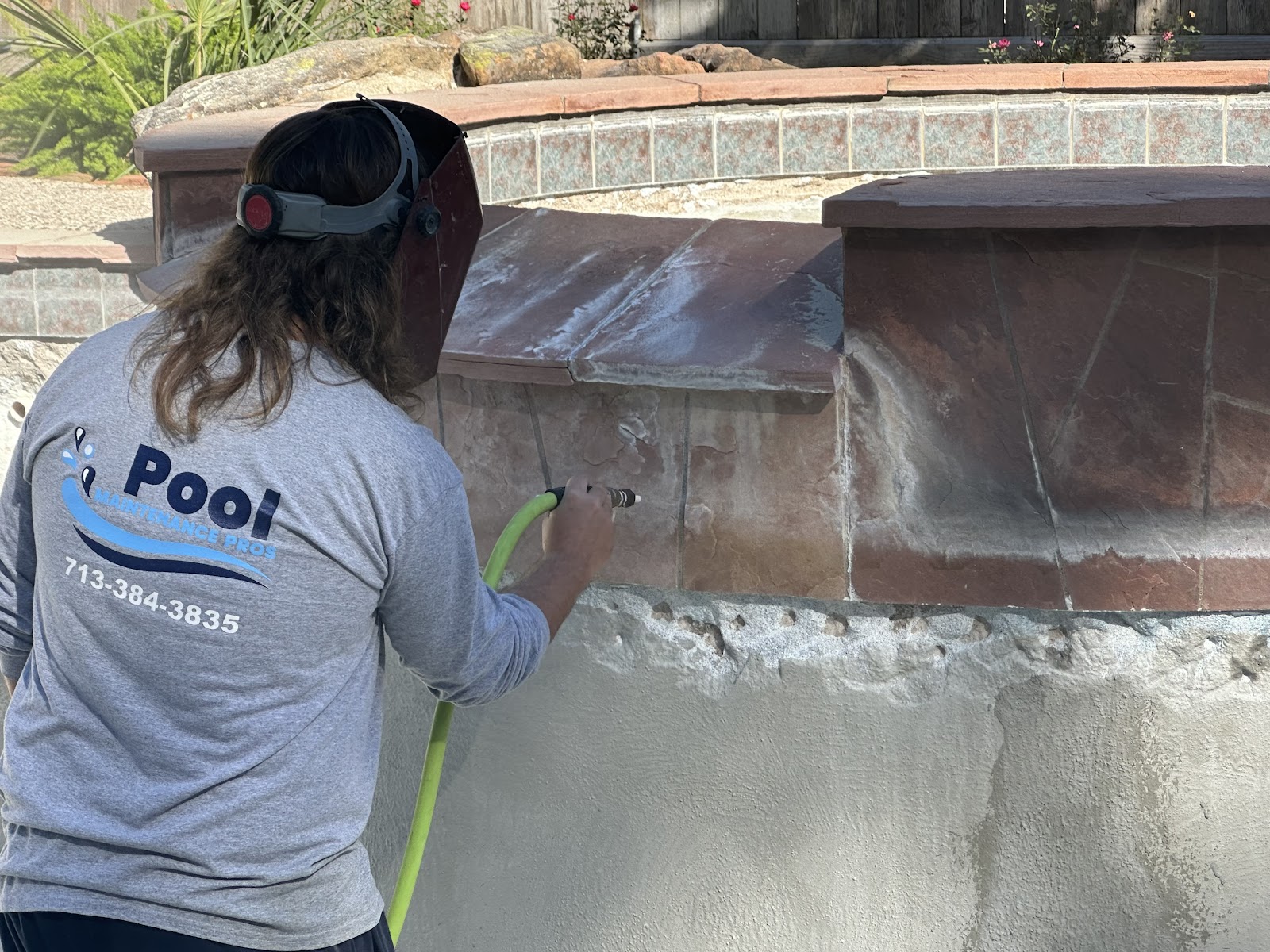
Rough plaster from low calcium is distinct. It's not the same as algae stains or chlorine damage. When calcium leeching happens, the plaster surface becomes etched and pitted. You might see small holes or a generalized roughness across large areas. Sometimes the plaster looks faded or bleached. In some cases, the bond between plaster and the concrete shell underneath can weaken. That leads to plaster delamination, where chunks actually peel away.
Concrete decking around the pool can suffer too. If your calcium is low, the water splashing onto the deck will slowly break down the concrete surface. You'll notice spalling, where the top layer flakes off. This is especially common in Montgomery pools with older concrete, where the damage compounds year after year.
Testing and Adjusting Calcium Hardness
You need to test your calcium hardness regularly. A basic pool test kit includes a calcium test strip or reagent. Many people skip this one because they focus on chlorine and pH. That's a mistake. Calcium is just as important. You should test calcium hardness at least once a month during the swimming season, more often if you're doing a lot of water top-ups due to evaporation.
If your calcium is low, you raise it with calcium chloride. It's inexpensive and fast-acting. You dissolve it in a bucket of pool water first, then pour it in slowly around the pool while the pump is running. The adjustment takes about 24 hours to fully stabilize. A typical pool might need 10 to 20 pounds of calcium chloride to move from 150 ppm to 250 ppm. The exact amount depends on your pool volume and how far below target you are.
If your calcium is already high, above 400 ppm, you have a different problem. You can't remove calcium easily. The best approach is a partial drain and refill, or you can use chelating agents designed for this. But prevention is far simpler than fixing either extreme.
Why Montgomery's Climate Makes This Worse
Our heat and humidity mean faster evaporation and faster chemical reactions. When water evaporates from your pool, it leaves minerals behind, but calcium hardness gets diluted by the fresh water you add to compensate. Over a hot summer, you can drop 50 ppm without realizing it. Then the low calcium damage starts, and by the time you notice the rough plaster, months of damage has already occurred.
The sun also breaks down chlorine faster in our climate. Stabilizer helps, but it's another reason to test more frequently than pools in cooler regions. Montgomery pools need more attention, not less.
Preventing Damage Before It Starts
The simplest approach is regular testing and small adjustments. If you catch low calcium at 180 ppm, a 20-pound bag of calcium chloride fixes it. If you wait until the plaster is visibly pitted, you're looking at a full replaster job, which costs thousands of dollars.
Keep a log of your calcium readings. Write them down. Look for trends. If you're dropping calcium every month, you might have a leak or you're not accounting for your refill water correctly. A calcium test kit costs less than fifteen dollars. It pays for itself the first time you avoid plaster damage.
If your pool's plaster is already rough or pitted, professional replastering is the only real fix. But most damage is preventable. The cost of calcium chloride and a few minutes of testing each month is nothing compared to the cost of repair.
Pool Maintenance Pros LLC serves Montgomery pools year-round. If you're unsure about your calcium levels or you've noticed rough plaster, call us for a water test and assessment. We'll get your chemistry back in balance and help you avoid expensive damage down the road.