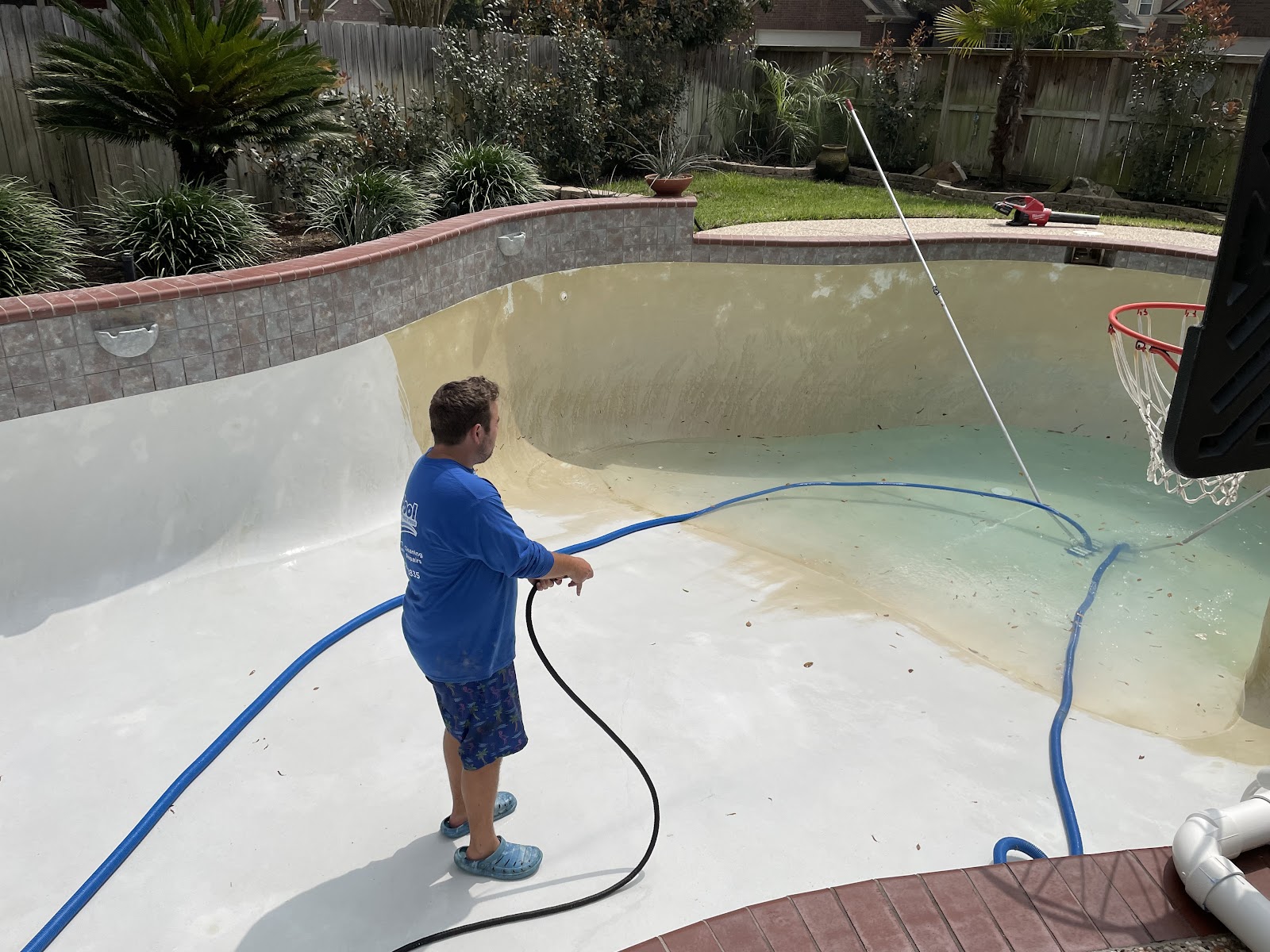
A pool that's been around for fifteen years has earned some wear. You're cleaning it regularly, the water chemistry is fine, and nobody's gotten sick, so on paper everything looks good. But the surface has lost that bright, inviting look it used to have. The plaster or finish has gotten chalky, stained, or just looks tired. This is normal. Older pools in the Montgomery heat and humidity don't stay pristine without intervention, and regular cleaning alone won't fix what's already happened to the shell itself.
Plaster Degradation Is Inevitable After a Decade
Pool plaster doesn't last forever. Most standard white plaster is designed to last ten to fifteen years in good conditions. After that, it starts to break down. The surface gets porous, which means algae and minerals find it easier to stick around. Calcium deposits build up in the pores. The plaster becomes chalky to the touch, and that chalky residue gets on your hands, your clothes, and your pool walls.
In Montgomery, the heat and sun accelerate this process. Our water is harder than it is in other parts of Texas, which means calcium and other minerals are always working against your plaster. Even if your chlorine levels are perfect and you're brushing twice a week, you can't reverse plaster that's already breaking down. Cleaning removes surface dirt. It doesn't restore the finish itself.
Hard Water Staining Gets Worse Over Time
Our Montgomery tap water has a lot of dissolved minerals in it. Every time you top off your pool, you're adding more calcium and magnesium. These minerals don't just stay in the water. They deposit on the plaster, on your tile line, on equipment, and anywhere else water evaporates or splashes.
After fifteen years, these deposits have had plenty of time to build up. They form a white or brownish crusty layer that looks like your pool is dirty even right after you clean it. Acid washing can help remove some of this, but it's temporary. The staining comes back because the water itself hasn't changed. If you want a real fix, you need to address the root cause, which is the hard water. Some people add a sequestering agent to their chemical routine, which helps suspend minerals in the water so they don't deposit. Others eventually decide to upgrade their finish to something more resistant to staining, like a plaster alternative.
Sun Damage Fades and Weakens the Surface
Montgomery gets plenty of sun. Over fifteen years, UV rays break down the binder in pool plaster. The surface becomes lighter and more fragile. You might notice the plaster color has faded to a pale gray or white, or that it chips more easily when you brush it. This isn't something you caused by skipping maintenance. It's physics.
Some pool owners apply a UV-protective coating to slow this down, but again, this is a temporary measure. Once plaster is significantly sun-damaged, you're managing decline, not preventing it. The pool still works. It's still safe. But it looks and feels older because it is older.
Algae and Bacteria Hold Onto Older Plaster Better
Smooth, new plaster is harder for algae to grip. Degraded, porous plaster is an invitation. Even if you keep your chlorine levels right and brush regularly, algae and bacteria find it easier to settle into the cracks and rough spots of old plaster. This is why you might see green or black spots that seem to come back faster than they used to, or why your pool looks a little dingy even though the water tests fine.
Brushing helps, but only so much. A bristle brush can't reach into microscopic pores. You can increase your chlorine a bit, which helps kill what's there, but it doesn't change the surface that's inviting the problem in the first place.
Your Options Moving Forward
If your pool is fifteen years old and looks dull, you have a few paths. You can keep doing what you're doing. The pool is still functional, and maintenance will keep it safe and swimmable. You can add treatments like acid washes or stain removers, which will brighten things temporarily. You can upgrade your chemical program to include sequestrants and algaecides that work harder on older plaster. Or you can plan for a replaster job, which gives you a fresh surface and a pool that looks new again.
A replaster typically lasts another ten to fifteen years. It's an investment, but it solves the dull appearance, the staining, the weakness, and the algae grip all at once. For many pool owners in Montgomery, it's the right move when their pool hits this age.
The choice depends on how much longer you plan to keep the pool and how much the appearance bothers you. Either way, there's nothing wrong with your maintenance routine. Your pool is just showing its age.
Pool Maintenance Pros LLC has been keeping Montgomery pools clean and chemical-balanced for years. If you want to talk about whether your pool needs a replaster, a new chemical approach, or just a professional cleaning plan, give us a call. We'll give you an honest assessment.