When pool plaster gets stained, most people think they have to live with it or drain the whole thing and start over. That's not true. Bead blasting is a real solution we use here in Montgomery to get stains off pool surfaces without grinding away the plaster underneath. It sounds technical, but it's actually a straightforward process that works on rust marks, mineral deposits, algae stains, and calcium buildup that chemical treatments alone can't touch.
What Bead Blasting Actually Does
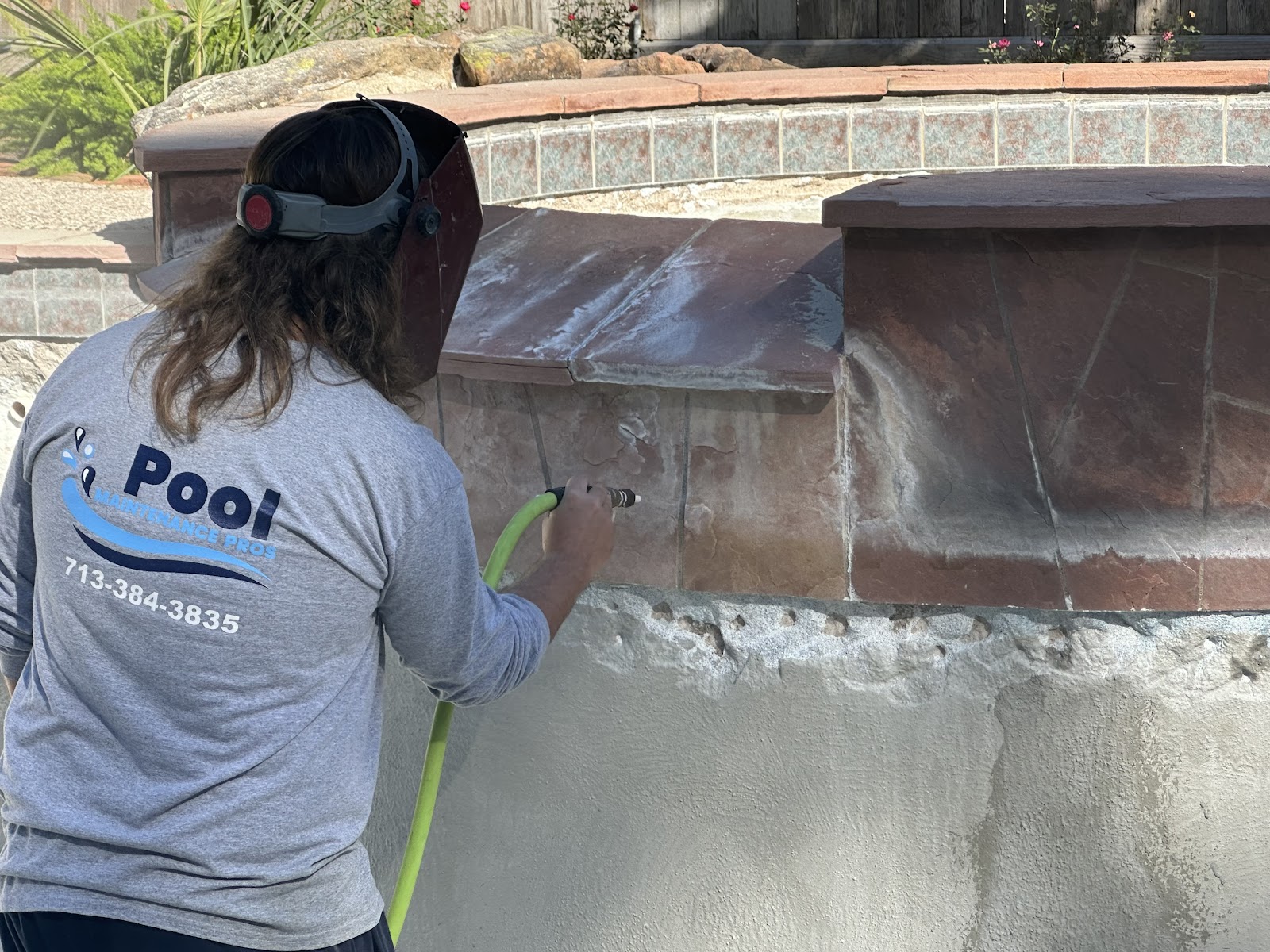
Bead blasting shoots tiny glass beads at high pressure against the pool wall. The beads are small enough and smooth enough that they knock stains loose without cutting into the plaster itself. Think of it like using a soft brush instead of steel wool. The key is controlling the pressure and the type of media. Too aggressive and you damage the surface. Too gentle and you waste time. We dial in the right settings based on what we're looking at, how old the plaster is, and what kind of stain we're dealing with.
The glass beads themselves don't scratch because they're not harder than the plaster. They just impact the stain layer and break its bond to the surface. Once the stain is gone, we vacuum up all the spent beads and debris, and the pool is ready to refill or treat chemically.
Why This Beats Other Stain Removal Methods
Chemical treatments work for some stains, but they take time and don't always get everything. Acid washing is faster, but it eats into the plaster itself and can thin it out over years. Draining and replastering is expensive and takes weeks.
Bead blasting sits in the middle. It's faster than chemicals, gentler than acid, and way cheaper than replastering. You don't have to drain the pool for most stain jobs, either. We can work on the walls and floor while the water is out, and you're back in the pool in a day or two instead of a month.
For Montgomery pools, we see a lot of calcium stains from our mineral-heavy water and rust marks from old metal fixtures or debris. Both respond really well to bead blasting. Algae stains and organic growth also come off cleanly.
The Kinds of Stains It Works On
Calcium deposits are the most common thing we treat. They build up around the waterline and on the floor, especially if your chemistry is off or your water is hard. Bead blasting removes them without affecting the plaster underneath.
Rust stains come from corroded pool equipment, rebar showing through, or metal objects left in the water. The rust layer comes off, and you're left with clean plaster.
Organic stains from algae, mold, or leaves are softer and come off even easier than mineral stains. These don't require high pressure at all.
We can also handle acid stains, which are chemical burns in the plaster. These are trickier because the damage goes deeper, but bead blasting can lighten them and make them less visible.
The one thing we can't fix with bead blasting is structural damage. If the plaster is cracked, flaking, or deteriorating, that's a replastering job. But for surface stains, bead blasting works.
What Happens During the Process
We start by draining the pool or lowering the water level enough to access the areas we need to treat. Then we inspect the stains up close to decide on pressure settings and media size.
The blasting itself is loud, so we usually schedule it during daytime hours and let neighbors know. The process kicks up a dust cloud, so we contain the work area. Once we're done, we sweep and vacuum everything out, including all the spent beads.
After blasting, the plaster is clean and slightly textured. Some customers want us to acid wash lightly after to smooth it out and improve the appearance. Others leave it as is. We'll recommend what makes sense based on what we see.
Then the pool gets refilled, the chemistry gets balanced, and you're good to go. The whole process usually takes a day or two depending on pool size and how many stains we're dealing with.
Cost and When to Consider Bead Blasting
Bead blasting costs less than replastering but more than a chemical treatment. For most stains in Montgomery, we're talking a few hundred dollars for a residential pool, not thousands. It's worth it if chemicals haven't worked or if you want fast results without draining the pool.
If your plaster is old and thin already, we might recommend caution with high-pressure blasting. We can do lower-pressure work, but results might be slower. If your plaster is in good shape, we can be more aggressive and get better results faster.
Preventive chemical maintenance helps slow stain buildup, but bead blasting is a real tool when stains do show up.
When to Call a Professional
This isn't a DIY job. The equipment is expensive, the pressure is dangerous if you don't know what you're doing, and you can wreck your plaster in minutes if you get it wrong. We've seen homeowners try pressure washers and damage their pools. Bead blasting requires training and the right equipment.
Pool Maintenance Pros has been doing this work in Montgomery for years. We know our local water, our plaster, and our equipment. If you've got stains you want gone without replastering your pool, call us for a free look and estimate.