Black stains on pool plaster are one of the most frustrating problems a pool owner can face. They look like mold or algae, but they're usually something different and tougher to handle. In Montgomery's humid climate, where moisture and heat work together year-round, these stains show up more often than most people expect. The good news is that understanding what causes them and how to treat them means you don't have to live with a stained pool or pay for unnecessary replastering.
What Actually Causes the Black Stains
Most black stains on plaster are not algae. They're either metal deposits or a type of algae that embeds itself into the plaster surface itself, called black algae or black spot. Metal stains come from copper or iron in your water or from corroded pool equipment. Black algae is a stubborn organism that grows in the pores of the plaster rather than just on top of it, which is why brushing alone won't remove it.
In the Montgomery area, we see both types. If your water source has high mineral content or if your pool equipment has been corroding, metal stains are likely. If you've let chlorine levels drop or haven't brushed the pool regularly, black algae takes hold fast. The difference matters because the treatment is completely different.
How to Tell Which Type You're Dealing With
Metal stains don't brush away, but they also don't grow back immediately if you remove them. They're just discoloration in the plaster. Black algae, on the other hand, will return within days or weeks if you don't kill it at the root. Try brushing the stain hard with a pool brush. If it comes off and doesn't return quickly, it's likely metal. If it stays put or comes back fast, it's black algae.
Another test is to apply a small amount of chlorine tablet directly to the stain and wait a few minutes. Metal stains won't respond. Black algae will lighten or disappear temporarily. This tells you what you're fighting.
Removing Metal Stains
For copper or iron stains, you need a sequestering agent, which is a chemical that binds to the metal and lets your filter remove it from the water. Start by testing your water to confirm you have metal content. Then add the sequestrant according to the product instructions and run your filter for 24 hours. The stain should fade as the metal is pulled from the plaster.
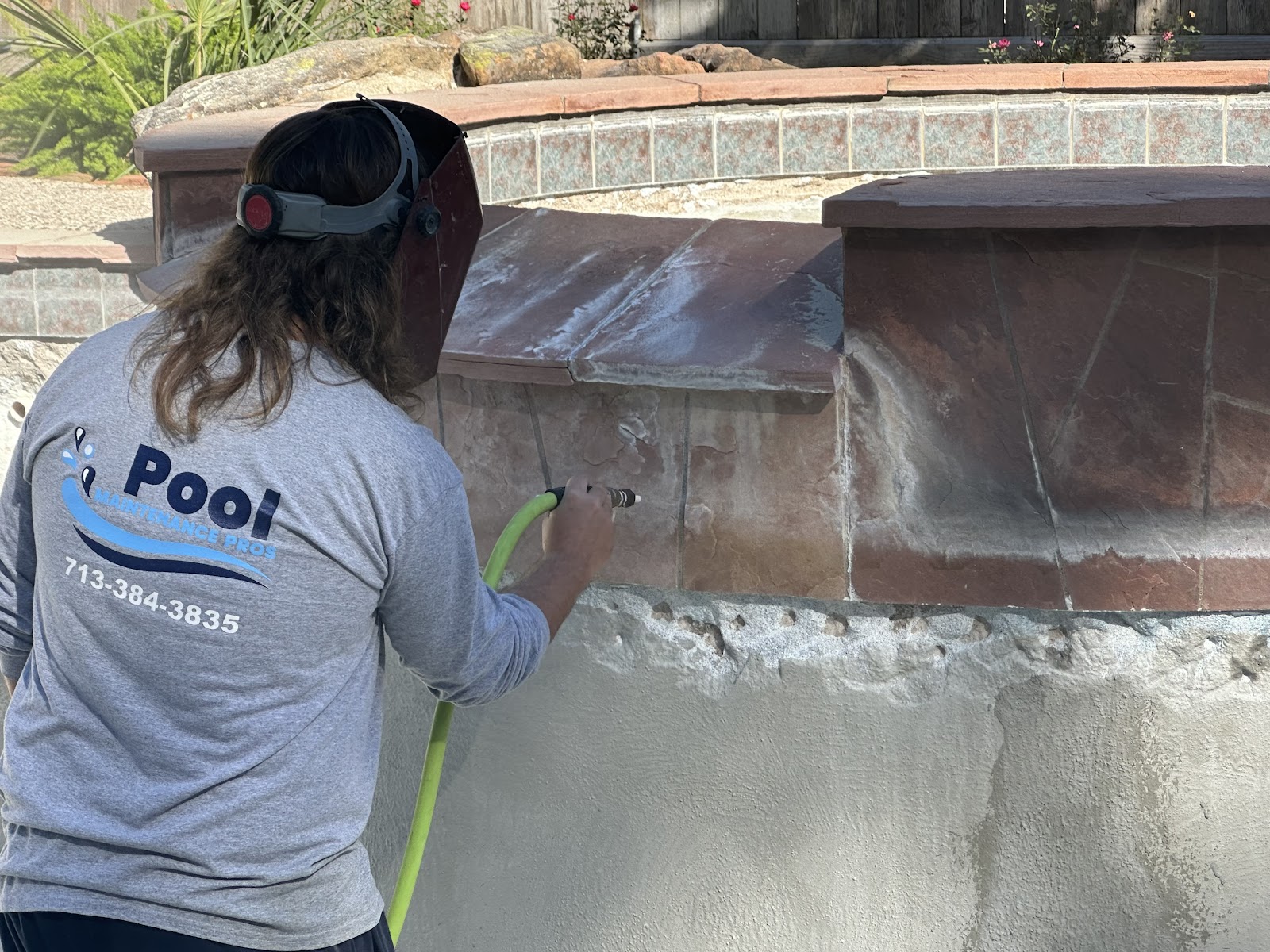
If the stain is stubborn, you may need to drain and acid wash that section of the pool, but that's usually a last resort and something we handle here at Pool Maintenance Pros. For most homeowners in Montgomery, the sequestrant approach works fine and costs a lot less.
Fighting Black Algae
Black algae is harder. It needs aggressive chlorine treatment and physical scrubbing. Brush the stained area hard and often, every day if possible. Raise your free chlorine level to 5 to 10 ppm, well above the normal 2 to 4 ppm range, and keep it there for at least a week. Some pool owners add a algaecide designed for black algae, though chlorine alone usually works if you're patient and persistent.
The key is consistency. Don't skip a day of brushing. Black algae spreads fast if you let up. In Montgomery's heat, it thrives, so staying on top of it prevents the stain from getting worse and spreading to other parts of the pool.
Prevention is Easier Than Treatment
The real solution is to prevent these stains from forming in the first place. Maintain chlorine levels between 2 and 4 ppm at all times. Brush your pool at least twice a week, more often in summer. Keep your filter clean and running properly. If you have high mineral content in your water, use a sequestrant monthly as a preventive measure. Test your water regularly, not just once a season.
For pool owners who don't want to manage all of this themselves, a service plan is worth considering. We monitor chemical levels, brush the pool, clean the filter, and catch problems before they become stains or bigger damage.
When to Call a Professional
If you've tried brushing and chemicals and the stain is still there after two weeks, or if the stain is spreading, it's time to call in someone who does this work regularly. Black algae can be stubborn enough that it needs professional-grade treatment or even acid washing. Metal stains sometimes need specialized testing to confirm the source and rule out other causes. What looks like a stain might also be early plaster deterioration, which is a different problem altogether.
Pool Maintenance Pros has been serving Montgomery for years and we've seen every type of stain and discoloration. We can diagnose the problem quickly and give you a real cost estimate for fixing it. Call us today if your pool has stains that won't go away, and we'll get it back to looking clean.